业务、组织与心态
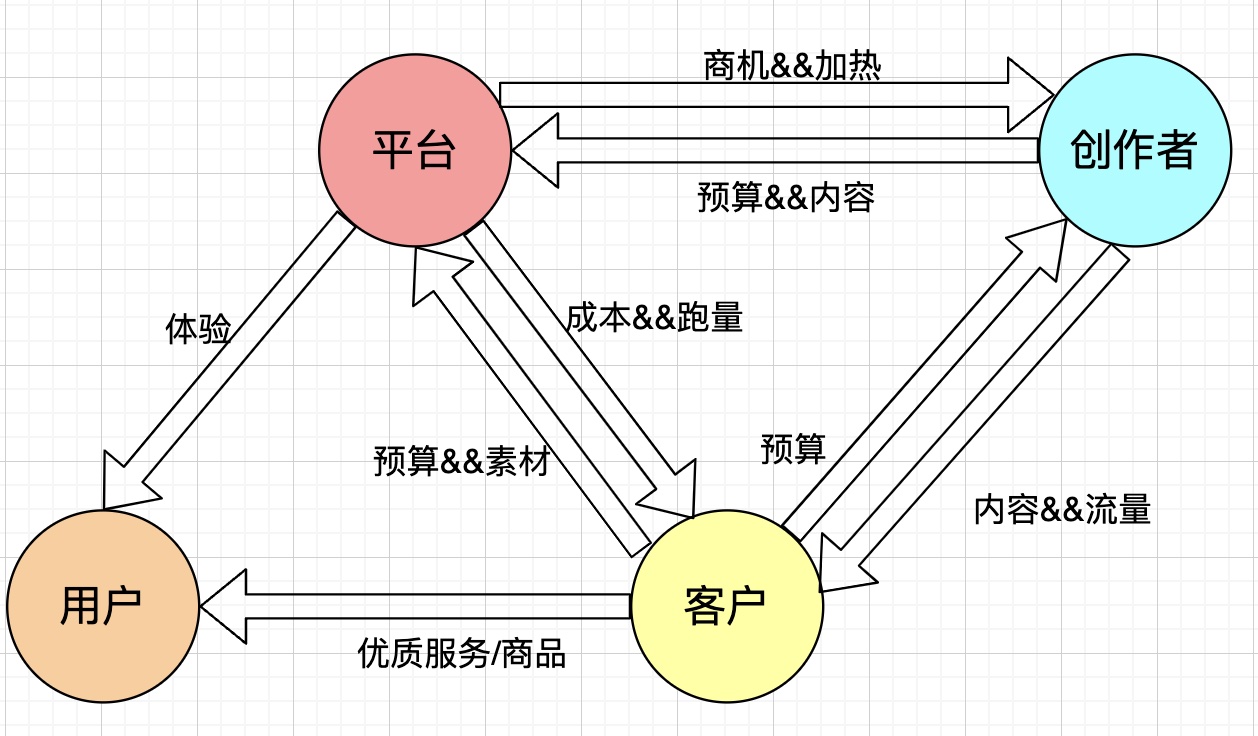
最近半年经历了一些业务与组织上的变化,对于这部分也有了一些新的理解和体会,值得写一篇文章来梳理与总结。本文主要讲了对业务和组织的一些看法,包括如何看待 “矛盾” 的业务定位和观点、组织的进化过程、团队组建里的识人与用人等;以及在这个过程中,该如何调整自己的心态。文章比较发散,纯属个人碎碎念,祝开卷有益
“Quantitative Trading: How to Build Your Own Algorithmic Trading Business” by Ernie Chan is a comprehensive guide that explores the world of quantitative trading and provides practical advice for building a algorithmic trading business, especially for individuals interested in quantitative trading.
It covers essential concepts, methodologies, and practical tips to help readers develop and implement their own algorithmic trading strategies while effectively managing risk and building a sustainable trading business.
Due to the significant benefits I received from reading this book, I want to write down some of the most important takeways I get from this book, with the hope that it can also be useful to you.
This passage is about the last four chapters, which introduces execution system in actual trading(automated and semi-automated), how to minimize transaction cost and determine the optimal leverage using the Kelly Criterion. It also talks about some special topics or common sense in trading. Finally, it lists some advantages of individuals investors over institutional investors.
“Quantitative Trading: How to Build Your Own Algorithmic Trading Business” by Ernie Chan is a comprehensive guide that explores the world of quantitative trading and provides practical advice for building a algorithmic trading business, especially for individuals interested in quantitative trading.
It covers essential concepts, methodologies, and practical tips to help readers develop and implement their own algorithmic trading strategies while effectively managing risk and building a sustainable trading business.
Due to the significant benefits I received from reading this book, I want to write down some of the most important takeways I get from this book, with the hope that it can also be useful to you.
This passage is about the first four chapters, which introduce basic requirements for independent traders, including search for ideas, perform backtest, and what we need before conducting real trading.
“The Almanack of Naval Ravikant” is a book that compiles the wisdom and insights of entrepreneur and investor Naval Ravikant. This book mainly talks about two topics, wealth and happiness. It offers practical advice on how to live a more fulfilling and purposeful life.
Through his own experiences and perspectives, Naval provides readers with valuable insights into topics like success, motivation, and personal growth, making the book a useful guide for anyone looking to improve their life and achieve their goals
I have benefited greatly from reading this book, and I want to write some important takeaways from this book. As this book was written in English, I want to give it a try to write it in English, too. Hoping it will be beneficial to you, this passage is about the second topic: Happiness
The passage about the first topic: wealth, can be found here
“The Almanack of Naval Ravikant” is a book that compiles the wisdom and insights of entrepreneur and investor Naval Ravikant. This book mainly talks about two topics, wealth and happiness. It offers practical advice on how to live a more fulfilling and purposeful life.
Through his own experiences and perspectives, Naval provides readers with valuable insights into topics like success, motivation, and personal growth, making the book a useful guide for anyone looking to improve their life and achieve their goals
I have benefited greatly from reading this book, and I want to write some important takeaways from this book. As this book was written in English, I want to give it a try to write it in English, too. Hoping it will be beneficial to you, this passage is about the first topic: Wealth
在搜广推相关业务中,除了 ctr、cvr 这类常规的二分类任务,还存在着预估 stay_duration、LTV、ECPM、GMV 等一系列回归任务
ctr、cvr 这类二分类任务常用的损失函数是交叉熵损失,基本假设是事件服从伯努利分布,最终学习的输出是正样本的比例,而回归任务中存在着非常多种的损失函数可选,如 mse、mae、huber loss、log-normal、weighted logistics regression、softmax 等
每种损失函数都有其假设和适用范围,如果真实 label 分布与假设差异较大,容易导致结果不佳,因此,本文会重点关注这些常见 loss 的推导过程以及假设
In search/recommendation/advertising related businesses, besides common binary classification tasks like CTR and CVR, there are a series of regression tasks estimating stay_duration, LTV, ECPM, GMV, etc.
CTR/CVR binary classification tasks commonly use cross-entropy loss, with the basic assumption that events follow Bernoulli distribution, ultimately learning the proportion of positive samples. But regression tasks have many optional loss functions, like MSE, MAE, Huber loss, log-normal, weighted logistics regression, softmax, etc.
Each loss function has its assumptions and applicable scope. If the real label distribution differs significantly from assumptions, results can be poor. Therefore, this article focuses on the derivation process and assumptions of these common losses.
In practical business scenarios, data often consists of multiple domains. Taking advertising as an example, there are often multiple conversion targets, and when predicting CTR and CVR, the influence of different conversion targets must be considered, because the distributions (such as mean and variance) of CTR and CVR are often inconsistent across different conversion targets.
The most intuitive approach to this problem is to add domain-related features or split models by domain. The former is an implicit method that requires features to be sufficiently distinctive and learnable by the model, but there’s no quantitative standard for “sufficiently distinctive,” so we basically have to rely on experimental results. The latter has the problem of high maintenance cost—for example, with n domains, you’d need n separate models.
This article focuses on methods to serve multiple domains with a single model, mainly covering work that has been validated in industry and publicly published. These methods can generally be categorized into three types:
在实际的业务中,数据往往由多个 domain 组成,以广告为例,往往会存在多个转化目标,在 ctr、cvr 的预估时也要考虑不同转化目标的影响,因为在不同转化目标下,ctr、cvr 的分布 (如均值、方差) 往往是不一致的
解决这个问题最直观的思路是加 domain 相关特征或根据 domain 拆模型,前者属于隐式的方法,需要特征的区分性足够强、能被模型学到,但这个足够强没有一个量化的标准,基本只能看实验效果;后者则存在维护成本过高的问题,比如说有 n 个 domain 就要拆成 n 个模型
本文着重讲如何通过一个模型 serve 多个 domain 的方法,主要是在业界验证有收益且公开发表的工作,基本上可以分为 3 类
混排,往往是的推荐系统的最后一个环节,在这个阶段,自然内容(后面简称 item)需要与营销内容(后面简称 ad)进行混合,生成最终推送给用户的 list
如果以 Long Term Value (LTV) 的视角来看, 这是个在 LT 和 V 之间做 trade-off 的过程,ad 如果出得过多,必然会挤压 item 的数量和位置,进而影响用户体验和留存即 LT,但相应的广告收入,或者说 Average revenue per user (ARPU) 会提升,反之亦然
所以业界往往的做法是定一个用户体验的约束,在这个约束下尽可能优化 ad 的效率,即达到收入最大化,因此很自然可以把这个建模成一个最优化问题,LinkedIn 在 2020 年的这篇 paper 就是这么做的,Ads Allocation in Feed via Constrained Optimization
直观地看混排这个问题,有 2 个子问题需要解决
(1)怎么计算每个 item 或 ad 在每个位置上的价值:因为 item 和 ad 是各自排序的,目标不同,最终的值的量纲也不同,这么把两者的 scale 拉到可比范围是一个需要讨论的问题
(2)怎么分配能让最终 list 价值最大化:在 item 和 ad 的价值确认后,怎么插入 item 和 ad 的位置,从而达到整个 list 的最大化
上面提到的 LinkedIn 的 paper 重点是在解决第二个问题,部分内容也涉及到第一个问题 ;本文会先讲一下这篇 paper 的建模方法,然后讨论下计算 item 和 ad 价值的一些思路,混排中一些其他需要注意的事项